October 25-31, 2026 – Vayera (“He appeared”) – Parshat 4
- Torah: Genesis 18:1-22:24
- Haftara: II Kings 4:1-37
- Brit Chadasha: Luke 17:28-37
וַיֵּרָ֤א אֵלָיו֙ יְהוָ֔ה בְּאֵלֹנֵ֖י מַמְרֵ֑א וְה֛וּא יֹשֵׁ֥ב פֶּֽתַח־הָאֹ֖הֶל כְּחֹ֥ם הַיּֽוֹם׃
Vayera elav Adonay be’Eloney Mamre vehu yoshev petach-ha’ohel kechom hayom.
God appeared to [Abraham] in the Plains of Mamre while he was sitting at the entrance of the tent in the hottest part of the day.
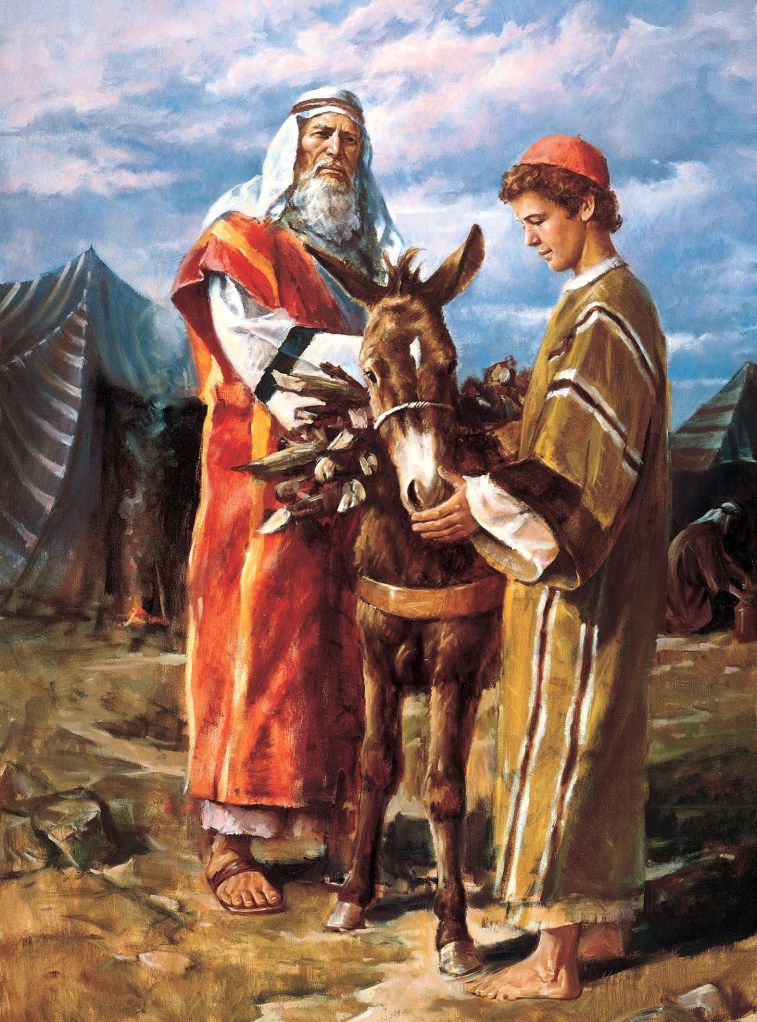
The Akedah (binding) Of Yitzchak: B’reisheet 18:6-8 “Abraham took the wood of the burnt offering and laid it on Isaac his son. He took in his hand the fire and the knife. They both went together. Isaac spoke to Abraham his father, and said, “My father?” He said, “Here I am, my son.” He said, “Here is the fire and the wood, but where is the lamb for a burnt offering?” Abraham said, “God will provide himself the lamb for a burnt offering, my son.”
The Biblical account of the time of “Abraham’s Test” should be viewed from a Hebraic stand point in order to fully see all the points that show Mashiach in the Akedah. One simple example we will look at today is the age of Yitzchak. In the passage of the Torah (Genesis 22:5) we see him described as a “boy” or “lad” (depending on the translation you are using), meanwhile the other servants are described as “young men”. Most people envision a young boy around the age of twelve or so but the Torah does not indicate that to be the case, but instead the Hebrew says he is Na-ar (a boy or young man/unmarried youth or eligible bachelor/servant). Seder Olam Rabbah 1: places Isaac’s age in Genesis 22 at the age of 36. Most opinions place Isaac at the age of 37 at the time of the sacrifice.
In B’reisheet 23:1, immediately following the Akedah, we see the record of Sarah’s Life, “Sarah lived one hundred twenty-seven years. This was the length of Sarah’s life.” The sages deducted Yitzhak’s age from the calculation that Sarah being 90 years old at his birth and 127 years at her death would make his age around 36 or 37 years at the time of the “sacrifice”. Interestingly it seems Mashiach Yeshua was born around 6 BCE, approximately 2 years before the death of Herod the Great (4 BCE.). It is commonly held traditionally that His death and crucifixion took place in 30 CE. Most likely making Yeshua at the time of the crucifixion the same age as Yitzhak at the time of the Akedah.
Both men capable of resisting the will of their father, but raising their hand to be bound rather than in self defense. Both knowing that the promises of Adonai required their lives to accomplish His plan, and if they died … HaShem would indeed raise them up again. Both went on together with their father in agreement, Both trusting that HaShem is the God of the Living not the dead.
Matthew 22:29-32 But Yeshua answered them, “You are mistaken, not knowing the Scriptures, nor the power of God. For in the resurrection they neither marry, nor are given in marriage, but are like God’s angels in heaven. But concerning the resurrection of the dead, haven’t you read that which was spoken to you by God, saying, ‘I am the God of Abraham, and the God of Isaac, and the God of Jacob?’ God is not the God of the dead, but of the living.”
The similarities between Yitzhak in the Akedah, and Yeshua are endless and deep. The father wanted all of us to see it and understand it in the deepest parts of our souls. Rejoice in the only son of the father as you study this week and be eternally blessed by Parshat Vayera and the story of the Akedah!
Shalom Mish’pachah from Beth Hallel Lodi

