November 1-7, 2026 – Chayei Sarah (“Sarah’s Life”) – Parshat 5
- Torah: Genesis 23:1-25:18
- Haftara: 1 Kings 1:1-31
- Brit Chadasha: John 4:3-14
וַיִּהְיוּ֙ חַיֵּ֣י שָׂרָ֔ה מֵאָ֥ה שָׁנָ֛ה וְעֶשְׂרִ֥ים שָׁנָ֖ה וְשֶׁ֣בַע שָׁנִ֑ים שְׁנֵ֖י חַיֵּ֥י שָׂרָֽה׃
Vayihyu chayey Sarah me’ah shanah ve’esrim shanah vesheva shanim shney chayey Sarah.
Sarah’s lifetime—the span of Sarah’s life—came to one hundred and twenty-seven years.
Matthew 22:31-32 “And as for whether the dead are resurrected, haven’t you read what God said to you, ‘I am the God of Abraham, and the God of Isaac, and the God of Jacob’? He is God not of the dead but of the living!”
Last week we looked at Yitzchak as a young man the same age as Yeshua at the time of his sacrifice at the hand of the Ava father, and how they both willingly went with the Ava father to the sacrifice. There is a resurrection message known to everyone concerning the Akedah (binding) in a Midrash (Pirkei DeRabbi Eliezer 31) that makes us look at it deeply and with Tikvah (hope). It states – “When the sword touched Isaac’s throat his soul flew clean out of him. And when He let His voice be heard from between the cherubim, “Lay not thy hand upon the lad”, the lad’s soul was returned to his body. Then his father unbound him and Isaac rose, knowing that in this way the dead would come back to life in the future; whereupon he began to recite, “Blessed are you, Hashem, who resurrects the dead.”
We know from the account in Torah that Avraham returned alone, and another Midrash explains it thusly. “And Isaac, where was he? The Holy One, Blessed be He, brought him into the Garden of Eden, and there he stayed three years. (Midrash HaGadol) Gan Eden is a description used for paradise and is like saying he was taken up to heaven. With that in mind let’s look at this week’s promise of Chayim (life).
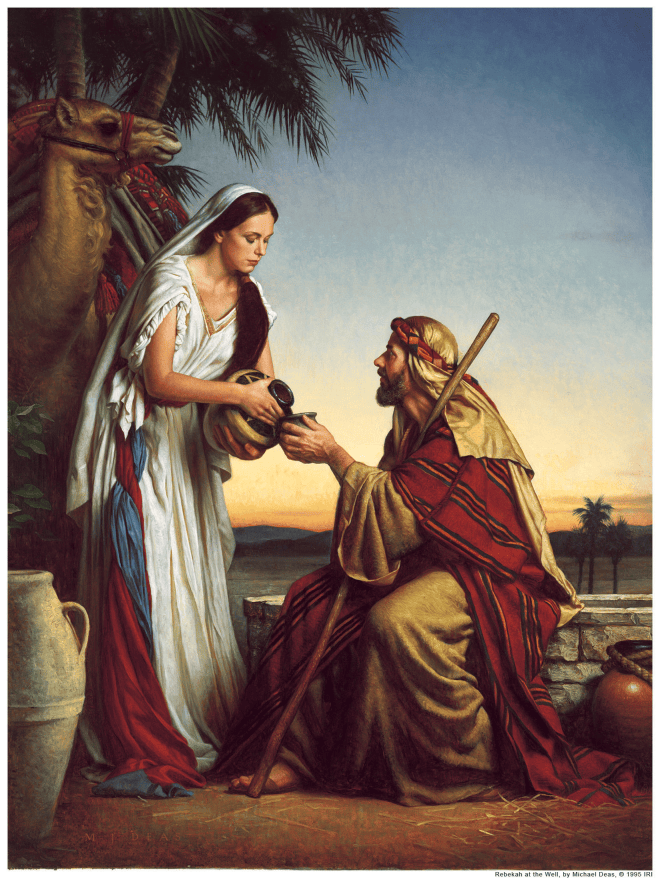
Yitzhak is not seen in the scriptures after the Akedah, until this week when His father’s servant brings his bride to be (called by the father) to him from afar. the account of the meeting paints a beautiful picture of our Redeemer Yeshua in his counterpart Yitzchak.
Torah says: “Vatisa Rivkah et-eyneyha vatere et-Yitschak vatipol me’al hagamal.”-“When Rebecca looked up and saw Isaac, she fell from the camel.” Translators try to be kind by saying she dismounted her camel, but the Hebrew clearly says vatipol “and she is falling” from her camel. The sages examined the possible meaning and one explanation (fitting the narratives of the Akedah) is as follows: “And Isaac went out … “From where did he go out? From Paradise. No wonder Rebekah lost her equilibrium as it says “and she fell from the camel”— for what she perceived was Isaac coming down from Paradise, and he walked the way the dead walk. (Minchat Yehudah)
All these Midrash are drawn from scripture but are suppositions and meditations of the sages. They are not to be taken literally, but they do point to an understanding of Mashiach in terms of what Yeshua taught us concerning His death, resurrection, and return for His Kallah bride. We are the Rivkah of Yeshua! Will we be surprised at the time of His return and fall off our camel, or fall on our faces with Simchat Joy and rejoicing?
Rejoice in the one who is coming from Gan Eden as you study this week and be eternally blessed in this Parshat of Chayim!
Shalom Mish’pachah from Beth Hallel Lodi

